Updated: 25.10.2026, 13:03. This article will be updated until Budget day.
 By Agnes B.
THE BUSINESS TIME
On Wednesday 28 October Chancellor of the Exchequer John Healey will present the Budget. It is his first Budget and the first Budget of Prime Minister Andy Burnham’s government. We have gathered in one place what is officially confirmed, separated it from press reports and added the editorial team’s analysis: who it affects and how to prepare.
The facts
- Date: HM Treasury confirmed on 31 July 2026 that the Budget will be presented on 28 October 2026. It is John Healey’s first Budget as Chancellor.
- OBR forecasts: on the same day the independent Office for Budget Responsibility (OBR) usually publishes new forecasts for growth, inflation, debt and tax receipts.
- Inflation: according to the ONS (data of 21 October), CPI inflation in September was 3.5% year on year, compared with 3.1% in August. Fuel pushed it up most: motor fuel prices rose 29.8% over the year, and a litre of petrol cost an average of 169.5p – the most since August 2022.
- Electricity without VAT: from 1 October 2026 household electricity bills in England, Scotland and Wales are exempt from VAT – until 31 March 2027. The government estimates the saving for a typical household at about £45 a year. Gas still carries 5% VAT.
- Fuel duty: the 5p-per-litre cut in fuel duty applies until 31 December 2026 (a rate of 52.95p per litre). Current legislation provides for a gradual return to the previous rates in 2027, but the government has said it will confirm the final rates in Budget 2026.
- Pubs and clubs: from 1 April 2027 pubs, social clubs and live music venues in England will get 20% off business rates. The largest concert venues will be excluded. Details are to be given with the Budget.
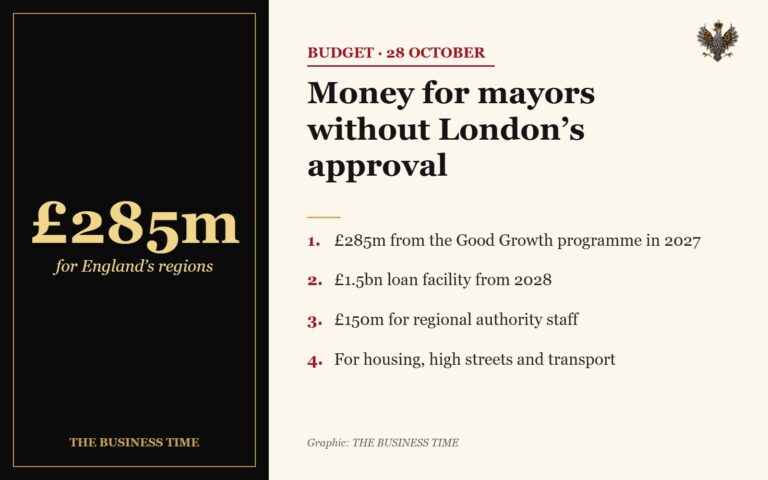
- Regions: the government has announced the “Good Growth” programme – £285m for England’s regions in 2027 and a £1.5bn loan facility from 2028. We described it in detail in the article £285m for England’s regions.
Confirmed or unofficial?
| Issue | Status |
|---|---|
| Budget on 28 October | Confirmed (HM Treasury) |
| No VAT on electricity from 1.10.2026 | Confirmed (government) |
| 20% relief for pubs from 1.04.2027 | Confirmed, details on 28.10 |
| No rises in income tax, VAT or NI | Manifesto pledge, which the Prime Minister upholds |
| No rise in capital gains tax (CGT) rates | Press reports, no official statement |
| Restriction of BADR relief on selling a business | Press reports, not confirmed by the government |
| The fate of the fuel duty cut after 31.12.2026 | Unknown – a decision possible in the Budget |
What came before
20–22 May 2026 – the government extends the 5p fuel duty cut to 31 December 2026.
July 2026 – Andy Burnham becomes Prime Minister and John Healey Chancellor (previously Rachel Reeves held the post).
21 July – announcement of the removal of VAT on household electricity.
23 July – announcement of 20% business rates relief for pubs, clubs and live music venues from April 2027.
31 July – HM Treasury announces the Budget date: 28 October.
9 September – deadline for businesses and organisations to submit Budget representations.
1 October – household electricity without VAT.
21 October – ONS: inflation rises to 3.5%.
28 October – the Budget and OBR forecasts.
18 November – next inflation data (October).
31 December – end of the current fuel duty cut; further rates are to be confirmed by the government in the Budget.
What has changed
The Chancellor and the policy direction have changed. The government says the Budget will shift “power and money” from Westminster to the regions and will stick to the fiscal rules. At the same time, price pressure has returned: inflation has been higher for the second month running, mainly because of fuel. That narrows the Chancellor’s room for manoeuvre.
TBT analysis – conclusions
Since income tax, VAT and NI contributions are to stay unchanged and the fiscal rules apply, the Chancellor will look for money elsewhere: in reliefs (e.g. BADR), taxes on wealth and gains, and changes for specific sectors.
For ordinary employees the Budget will most likely not bring big changes in take-home pay. Company owners, people planning to sell a business and fuel-dependent firms have the most to lose or gain.
With inflation at 3.5% and the economists’ forecasts compiled by HM Treasury (Bank of England rate around 3.9% at the end of 2026), you should not count on quick cuts in loan repayments.
Risks
TBT editorial assessment based on available information – not a government announcement.
| Risk | Affects | Level |
|---|---|---|
| A possible rise in fuel duty from 1 January 2027. Current legislation provides for a gradual withdrawal of the 5p cut (+3p from 1.01 and a total of +5p from 1.03.2027 compared with today’s rate), but the government will confirm the final rates in the Budget on 28 October. | drivers, transport and construction firms, couriers | HIGH |
| Restriction of BADR relief on selling a business | owners of Ltd companies planning to sell or pass on their business | MEDIUM |
| Changes to business rates and Small Business Rates Relief (SBRR) | shops, workshops, hospitality, offices | MEDIUM |
| Inflation above forecasts – dearer loans for longer | families with mortgages, firms with working capital loans | MEDIUM |
Who it affects
- Company owners and the self-employed – reliefs on selling a business, business rates, possible changes to taxes on gains.
- Fuel-dependent firms – transport, construction, services involving travel.
- Families – energy bills, fuel prices, loan repayments.
- The hospitality and entertainment sector in England – relief for pubs and clubs from 2027.
What it means for you
Employees: according to current announcements, income tax and NI rates are to stay unchanged. Your electricity bill is already lower thanks to the removal of VAT. The biggest unknown is fuel duty from January – it will become clear on 28 October.
A Polish business in the UK: until 28 October it is worth holding off decisions that depend on changes to tax reliefs, such as selling shares. Firms with fleets can prepare a simple cost scenario in case of higher fuel duty in 2027.
How to prepare
- If you are planning to sell your business or shares, talk to your accountant before 28 October. More: BADR relief under the knife?
- For peace of mind, calculate your business fuel costs in a cautious scenario: up to +5p per litre in 2027 – and check what the Chancellor actually announces.
- Check whether your premises benefit from Small Business Rates Relief – details of the reform are due in the Budget.
- Calculate your tax and NI in the TBT tax calculator, and check again after the Budget.
- On Wednesday afternoon read our Budget briefing – we will describe the decisions that affect Poles and Polish businesses.
What to watch next
- 28 October: the Chancellor’s speech and the Budget document on GOV.UK, plus the OBR forecasts.
- The decision on fuel duty after 31 December 2026.
- Details of the business rates reform and small business relief.
- 18 November: October inflation data (ONS).
Related TBT articles: economists’ forecasts before the Budget · Treasury adviser leaves before the Budget.
Sources
- HM Treasury, GOV.UK – Budget date (31.07.2026)
- HM Treasury – the Chancellor’s letter to the Treasury Committee (31.07.2026)
- ONS – inflation in September 2026 (21.10.2026)
- HMRC, GOV.UK – temporary zero rate of VAT on electricity in Great Britain (08.09.2026) – primary source
- National Energy Action – electricity without VAT (21.07.2026) – secondary source
- HMRC, GOV.UK – revised Fuel Duty rates 2026–2027 (22.05.2026) – primary source
- What Car? – fuel duty until the end of 2026 – secondary source
- UK Government, GOV.UK – 20% lower business rates for pubs, clubs and live music venues – primary source
- Winchester City Council – relief for pubs and clubs (23.07.2026) – secondary source
- Grant Thornton – Autumn Budget 2026
- Evelyn Partners – key dates before the Budget
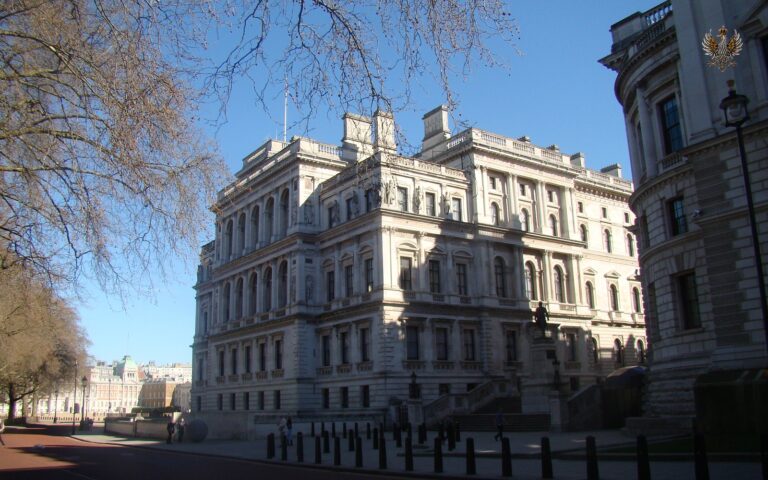
Photo: HM Treasury building from Horse Guards Road, London. Photo: Robert Lamb / Geograph, Wikimedia Commons, CC BY-SA 2.0.
We assess factual corrections and substantive responses. Verified changes are reflected in our reporting.
Contact the editorial desk →