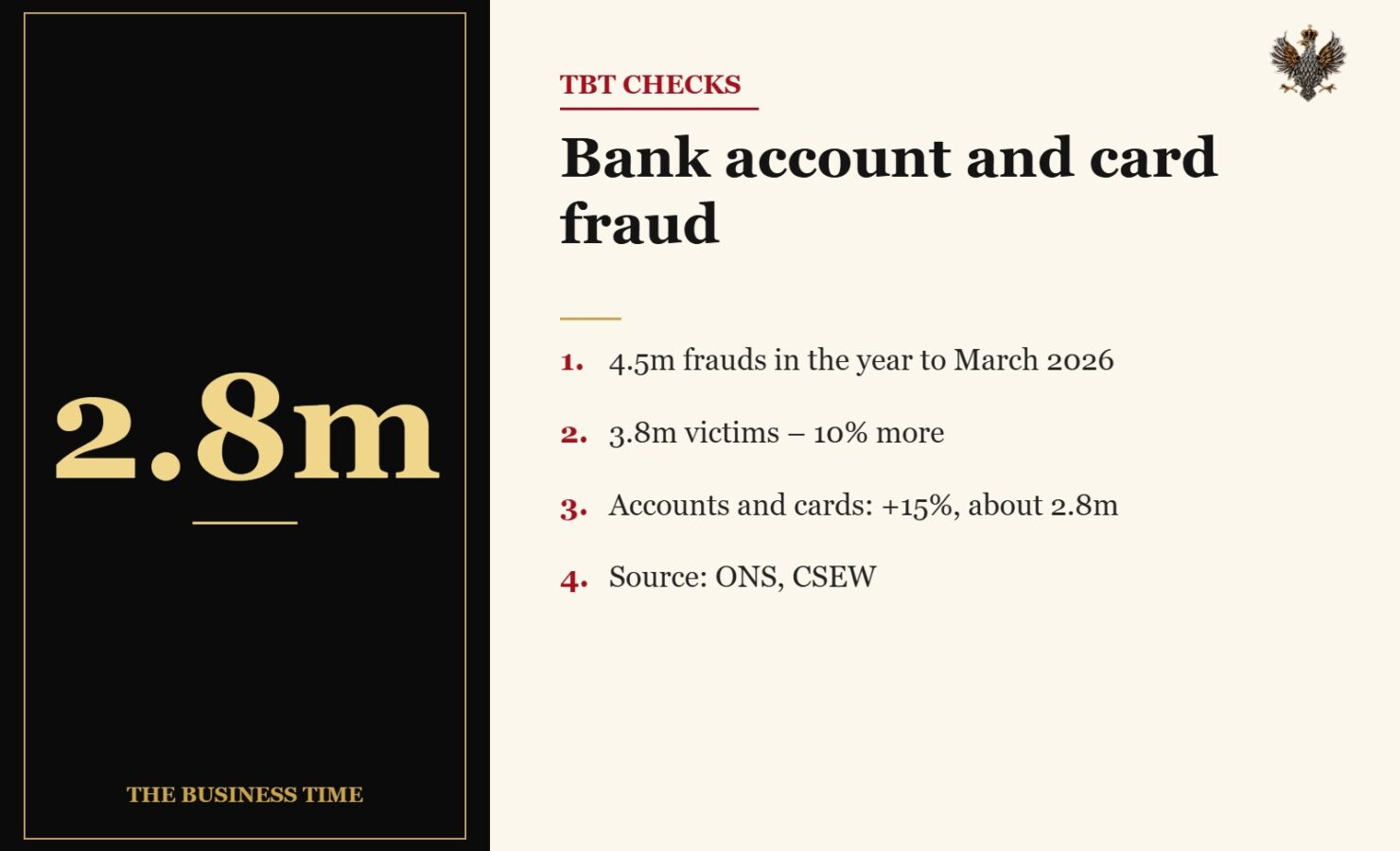
We checked the latest figures from the ONS Crime Survey for England and Wales. In the year ending March 2026, adults in England and Wales experienced about 4.5 million frauds, compared with 4.2 million a year earlier. The ONS notes that the change is not statistically significant. The number of victims, however, rose clearly – by 10%, from 3.4 million to 3.8 million people.
According to The National, which reported the figures on 15 October, fraud involving bank accounts and credit cards is growing fastest – up 15% to about 2.8 million incidents. Computer misuse, including account hacking and viruses, totalled 798,000 according to the ONS.
There is a gap in the statistics. This time the ONS did not publish police data on fraud, because the City of London Police is moving reports to the new Report Fraud system. The survey therefore shows the scale of the problem, but not how many cases reached the police.
What it means for you
According to the ONS survey, almost half of crimes in England and Wales (4.5 of 9.6 million) are fraud, and the target is most often the same: your account. Poles in the UK are frequent targets of fake texts “from the bank”, HMRC or courier firms, including in Polish. For small businesses, the risk is fake invoices and changed supplier bank details.
Our assessment
The figures show that fraudsters have changed their methods: fewer one-off attacks, more successful ones. More victims with a similar number of incidents means more people are being taken in. The most effective protection is simple – do not act under time pressure, and only call back on the number on your card or the bank’s official website.
What to do
- Forward a suspicious text to the free number 7726, and a suspicious email to [email protected].
- If you have lost money, call your bank on 159immediately, then report it to Report Fraud (in Scotland – Police Scotland, tel. 101).
- In your business, confirm any change to a supplier’s bank details by phone, on a known number.
Source: ONS, Crime in England and Wales: year ending March 2026; The National (15.10.2026).
We assess factual corrections and substantive responses. Verified changes are reflected in our reporting.
Contact the editorial desk →