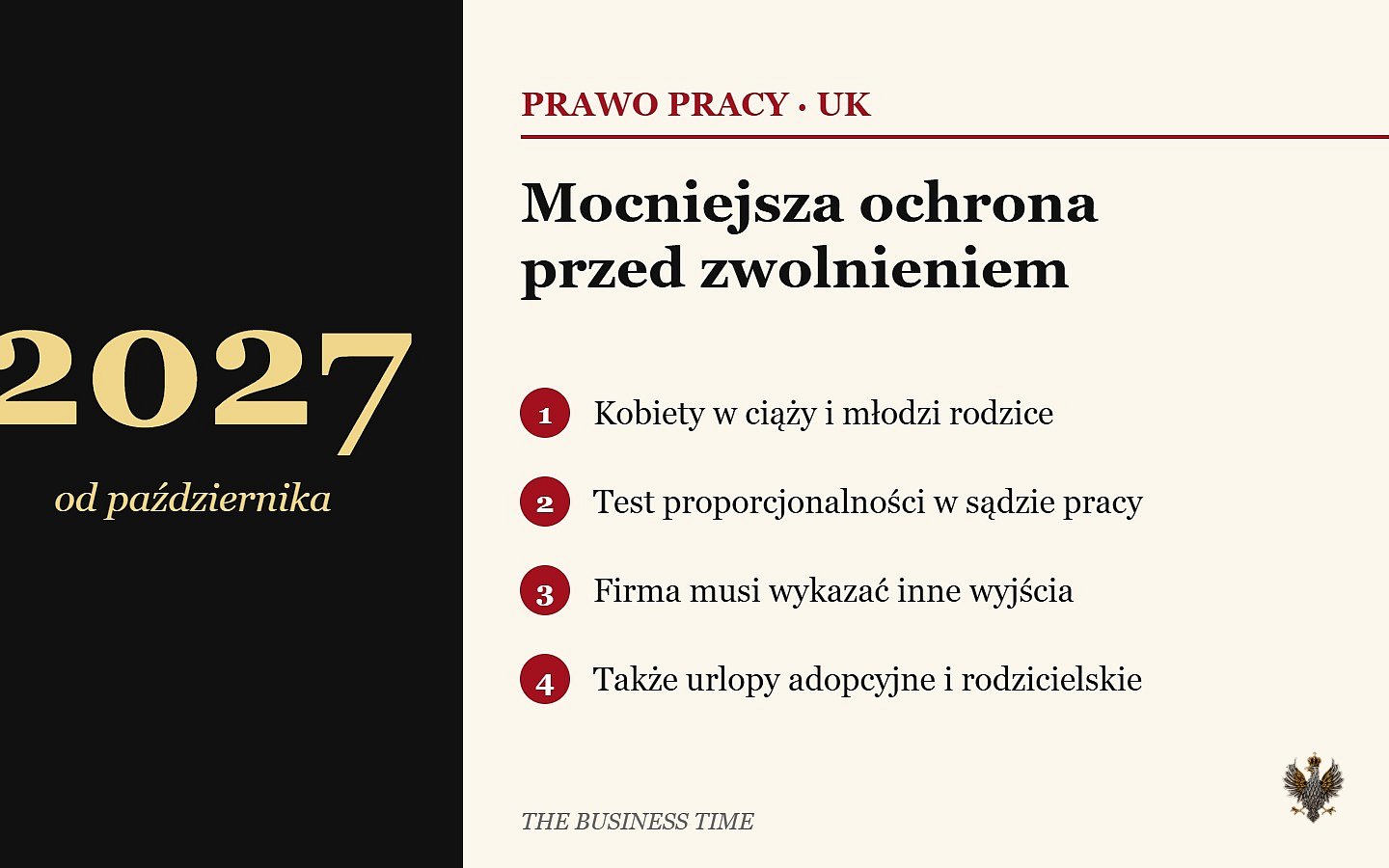
The UK government has announced stronger protection against dismissal for pregnant women and new parents. The Department for Business and Trade (DBT) published the announcement on 22 October 2026.
Today an employment tribunal checks whether a dismissal falls within the employer’s so-called “range of reasonable responses”. That test suits employers. In these cases it will be replaced by a proportionality test. Employers will have to show they considered all reasonable alternatives before dismissing someone.
According to the government, the change should take effect in October 2027. It will cover pregnant women, people on maternity, adoption or shared parental leave, on neonatal care leave, and partners on paternity leave after the mother’s death. The old test remains for other unfair dismissal cases.
The government is also planning rules to limit changes to pay and shift patterns for the same groups. It is all part of the Employment Rights Act. The change was announced by Kate Dearden, Minister for the Future of Work. The organisation Pregnant Then Screwed says 73% of women experience discrimination linked to pregnancy or maternity. The British Chambers of Commerce (BCC) says it will help draft practical guidance for businesses.
What it means for you
Employees and parents: if your employer dismisses you while pregnant or on parental leave, it will be easier to win your case. The company will have to show it genuinely looked for another solution, such as a different role.
Polish businesses in the UK: dismissal during pregnancy or leave will become much riskier. Documentation will count: which roles were offered, which options were examined and why they were rejected. This also applies to redundancies and changes to rotas.
Our assessment
The change is likely to take effect, as it is part of an Act already passed and the government has given a date. However, the details may change before October 2027, because the secondary legislation and guidance have yet to be written. For small firms the biggest cost will not be the law itself but the paperwork. Anyone who does not keep notes of HR meetings today should start now. For employees it is a real strengthening of their position, but only if they know their rights and keep to the deadlines for bringing a claim.
What to do
- Employers: review your dismissal and restructuring procedure. Record which alternatives were considered. Free advice is available from Acas.
- Employees: note the dates of meetings and keep emails from your employer. If problems arise, call Acas before the deadline for bringing a claim passes.
- Read the government announcement and the response to the “Make Work Pay” consultation.
Source: GOV.UK, Department for Business and Trade (22.10.2026).
We assess factual corrections and substantive responses. Verified changes are reflected in our reporting.
Contact the editorial desk →