Update: 25.10.2026, 15:26.
Since 1 July 2026, firms providing cryptoasset services to customers in the European Union have needed a licence under the EU’s MiCA regulation. Poland still has no authority able to issue such licences – the president has vetoed the law for the third time. What does this mean for customers in Poland?
The facts
- On 1 July 2026 the MiCA transitional period ended across the EU. National registrations (in Poland: the VASP register) are no longer enough.
- The European supervisor ESMA warned on 17 April 2026 that providing services without a MiCA licence after 1 July breaches EU law – including in a state that has not implemented the rules.
- Submitting an application does not allow a firm to keep operating. Only a granted licence counts.
- The Polish president vetoed the cryptoassets act for the third time on 11 June 2026 . That is why Poland has no authority that grants MiCA licences.
- According to an Elliptic review of 29 June 2026, ESMA’s interim register listed 213 licensed firms in 23 countries (most in Germany – 55).
What came before
30 December 2024 – MiCA applies in full; the transitional period begins
February 2026 – Polish regulator KNF: the deadline cannot be extended by law or by a KNF decision
17 April 2026 – ESMA warning
11 June 2026 – third veto of the law in Poland
1 July 2026 – end of the transitional period
TBT analysis – conclusions
Polish crypto firms that want to keep operating legally must obtain a licence in another EU country and move their business there. Customers in Poland can use platforms licensed in other states – but they are then supervised by a foreign authority, not the KNF.
Risks
- Unlicensed platforms must wind down – customers should move funds to a licensed firm or their own wallet.
- Fraudsters exploit the confusion and pose as “licensed” exchanges.
- Disputes with a foreign platform are harder than with a domestic one.
What it means for you
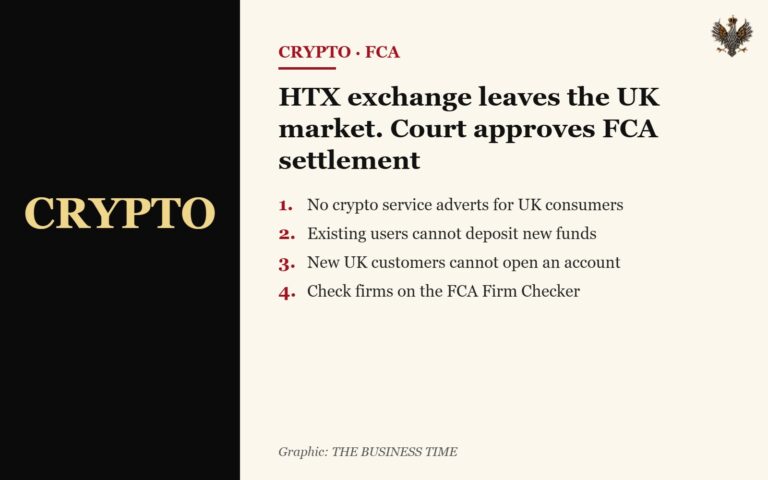
A Pole in the UK or Poland with a crypto exchange account: check whether the platform is on the ESMA register (for the EU) or the FCA register (for the UK). Also check the KNF public warning list.
Businesses: if you accept payments in crypto or tokens, check that your provider has a MiCA licence.
What to watch next
- Whether the Sejm passes a fourth version of the cryptoassets act.
- Updates to the ESMA register (weekly).
- Supervisors’ action against unlicensed firms.
Sources
- ESMA – Markets in Crypto-Assets Regulation (MiCA) – primary source
- Elliptic – end of the MiCA transitional period (29.06.2026) – supporting source
- Dudkowiak & Putyra – third veto and wind-down plans – supporting source
We assess factual corrections and substantive responses. Verified changes are reflected in our reporting.
Contact the editorial desk →