Editorial comment. This text expresses the opinion of THE BUSINESS TIME editorial team.
We know this from many Polish homes in Britain. Mum falls ill in Poland, someone buys a one-way ticket and stays “for a while” that turns into a month. Or a family saves for years for a deposit and the money sits in a savings account. In both cases, if a benefit is paid into the household, it is now worth making sure the office knows everything it should. We believe the simplest protection is to report a change before the bank does it for us.
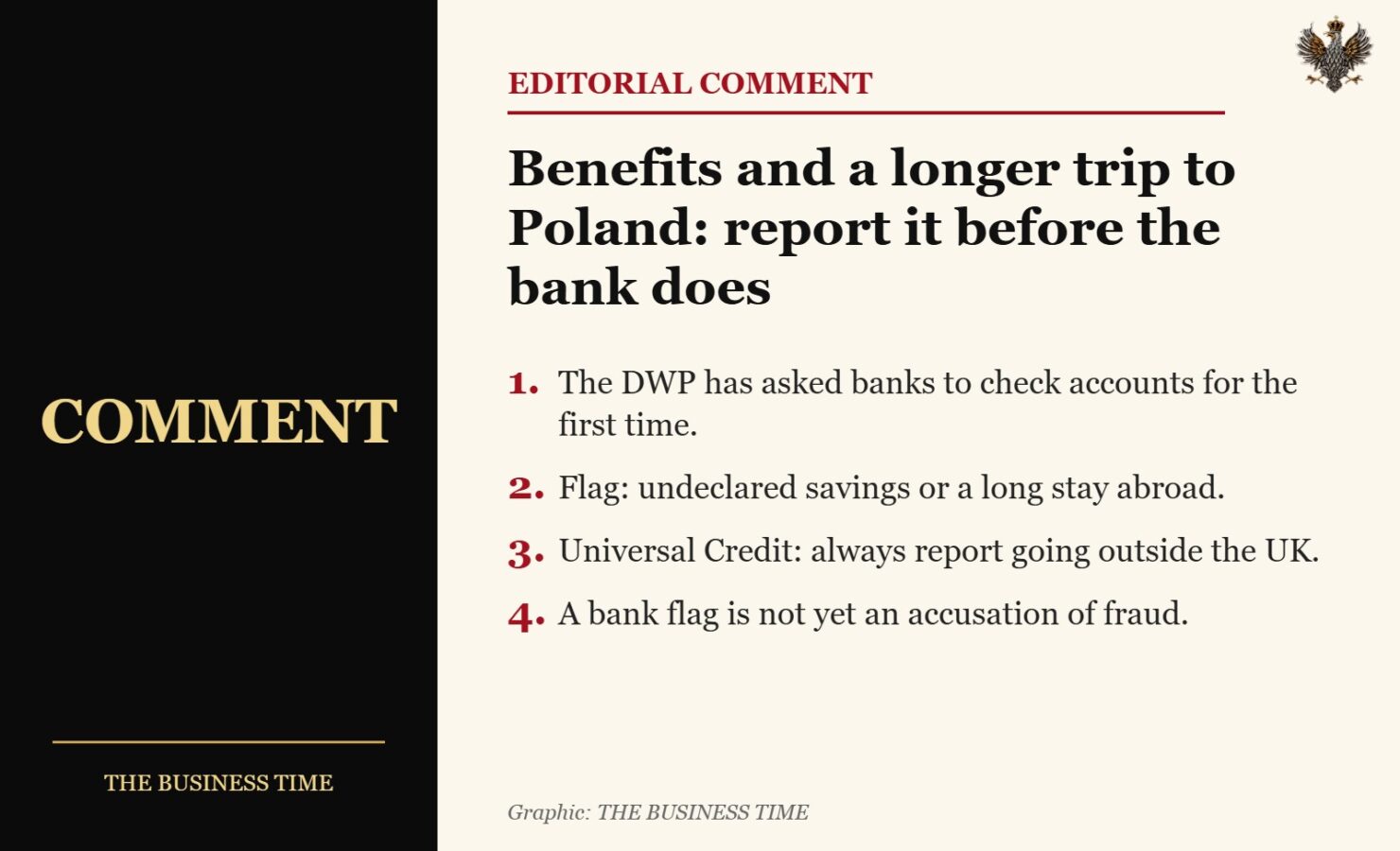
On Monday the Department for Work and Pensions announced that it had sent its first notice to banks under the new Eligibility Verification Measure. Banks are to flag accounts where data suggests someone may have undeclared savings or is staying abroad longer than the rules allow. The government expects this to save £1.2bn by 2030/31. Further steps have been announced for the Budget, including 2,000 additional anti-fraud specialists in Jobcentres and tougher checks on Universal Credit payments to people abroad.
Why does this matter to us? Because the rules are stricter than many people think. The GOV.UK page on Universal Credit states in black and white that you must report going outside Great Britain for any length of time, as well as changes to your savings. There is no leniency there for “just two weeks at my parents’”. Anyone who fails to report it may have to repay an overpayment and, in more serious cases, pay a penalty. We see that many people do not do this out of bad faith, but out of ignorance or lack of time.
The second argument is more practical. A small overpayment caught quickly is less trouble than a debt building up over a year. The DWP itself says the new system is meant to catch errors earlier, before they turn into debt. If someone knows they have not reported something, it is better to put it right now in their Universal Credit account than to wait for a letter.
There is another side, too, and we want to present it fairly. For many people the very thought that a bank is “looking” at their account for benefit purposes is unsettling. It is natural to ask how many mistakes automated checks will generate and who will pay for the stress of innocent people. These are legitimate questions. The DWP says it does not get access to transactions or to what we spend money on, that a flag from a bank does not mean fraud and that no decision will be made on that basis alone. The programme starts with a test phase under independent oversight. We will watch whether these promises survive contact with practice, and if we hear from readers about benefits being wrongly stopped, we will report on it.
Our conclusion is simple. There is no need to fear the bank; it is enough to stay one step ahead of it. Planning a longer stay in Poland, a larger payment into your account, an inheritance or a tax refund? Record it in your Universal Credit journal or call the office before you leave. Keep the confirmation. Five minutes today can save months of explaining tomorrow.
THE BUSINESS TIME editorial team
Sources: DWP, “Government unleashes £1.2 billion crackdown as part of anti-fraud drive” (26 October 2026); GOV.UK, Universal Credit – Report a change of circumstances (accessed 27 October 2026).
We assess factual corrections and substantive responses. Verified changes are reflected in our reporting.
Contact the editorial desk →