Comment by THE BUSINESS TIME editorial team.
On Wednesday, Chancellor John Healey presented his first Budget. We read it with one question in mind: what will change for someone who runs a small business in the UK, cleans, renovates, delivers parcels or lets out a single flat. We believe this Budget is good for those who work for themselves, and clearly worse for those who save or let property.
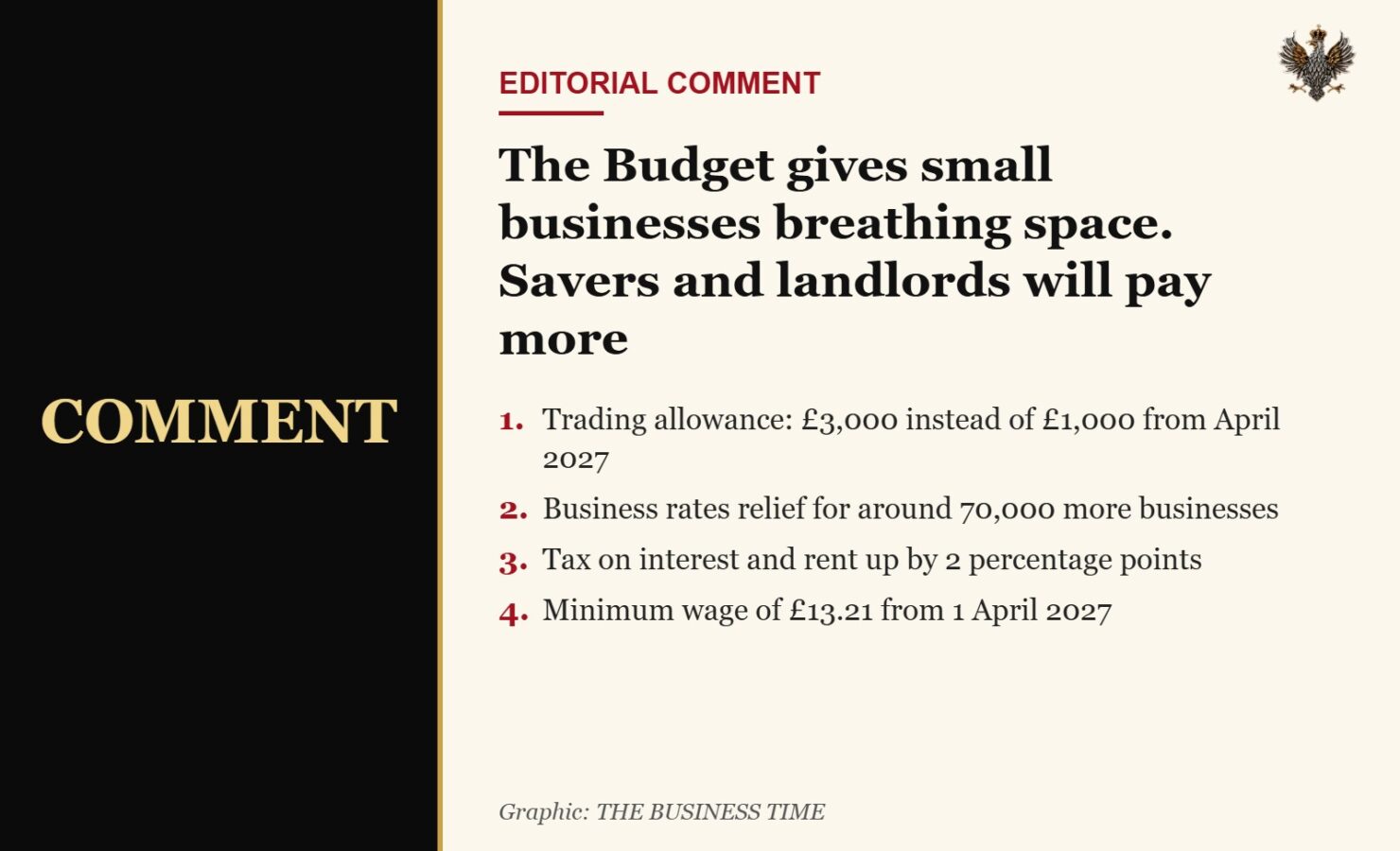
Let us start with the good news. The amount of small income on which you do not have to pay tax or file a return (the trading allowance) rises from £1,000 to £3,000 from 6 April 2027. That is how the government set it out in its Budget summary. We know many people who earn extra after hours: tutoring, nails, small repairs, selling handmade goods. For them, this is real relief and less paperwork.
The second good thing is business rates. According to the government, around 70,000 more businesses will be taken out of them thanks to a higher small business relief threshold. The threshold is to rise from £12,000 to £18,000 of rateable value, as reported by Unbiased. Polish shops, hair salons and small workshops often fall within exactly this range.
Now the other side. From April 2027, tax on savings interest and on rental income will rise by a further 2 percentage points. The government stresses that 84% of taxpayers will not feel the increase, and the cash ISA limit stays at £20,000. That is true. But we also see who is in the remaining 16%. They are often people who saved for years, bought one flat to let and treat it as their pension. Many of them are Poles who came here twenty years ago.
Then there is the minimum wage. From 1 April 2027, it will be £13.21 an hour, 3.9% more. A full-time worker will gain around £910 a year. We are glad about this, because it is the money of many of our readers. At the same time, the owner of a small business employing two or three people has to do the sums now, not in March.
We know the counter-argument and take it seriously. The state has to find the money for the £100 energy payment, cheaper fuel and support for Ukraine. Higher tax on capital income rather than on work is in this sense fairer: those with more savings contribute more. We understand this logic. However, we believe that this Budget blurs the line between a “wealthy investor” and “a family with one flat to let”.
Our conclusion is simple. If you work for yourself, this Budget gives you some breathing space and it is worth making use of it. If you let property or have larger savings outside an ISA, sit down with an accountant this winter, before the new rates take effect in April 2027.
THE BUSINESS TIME editorial team
Sources: GOV.UK – Budget 2026: Breathing space for today, hope for the future (28 October 2026); Unbiased – Autumn Budget 2026 (28 October 2026).
We assess factual corrections and substantive responses. Verified changes are reflected in our reporting.
Contact the editorial desk →