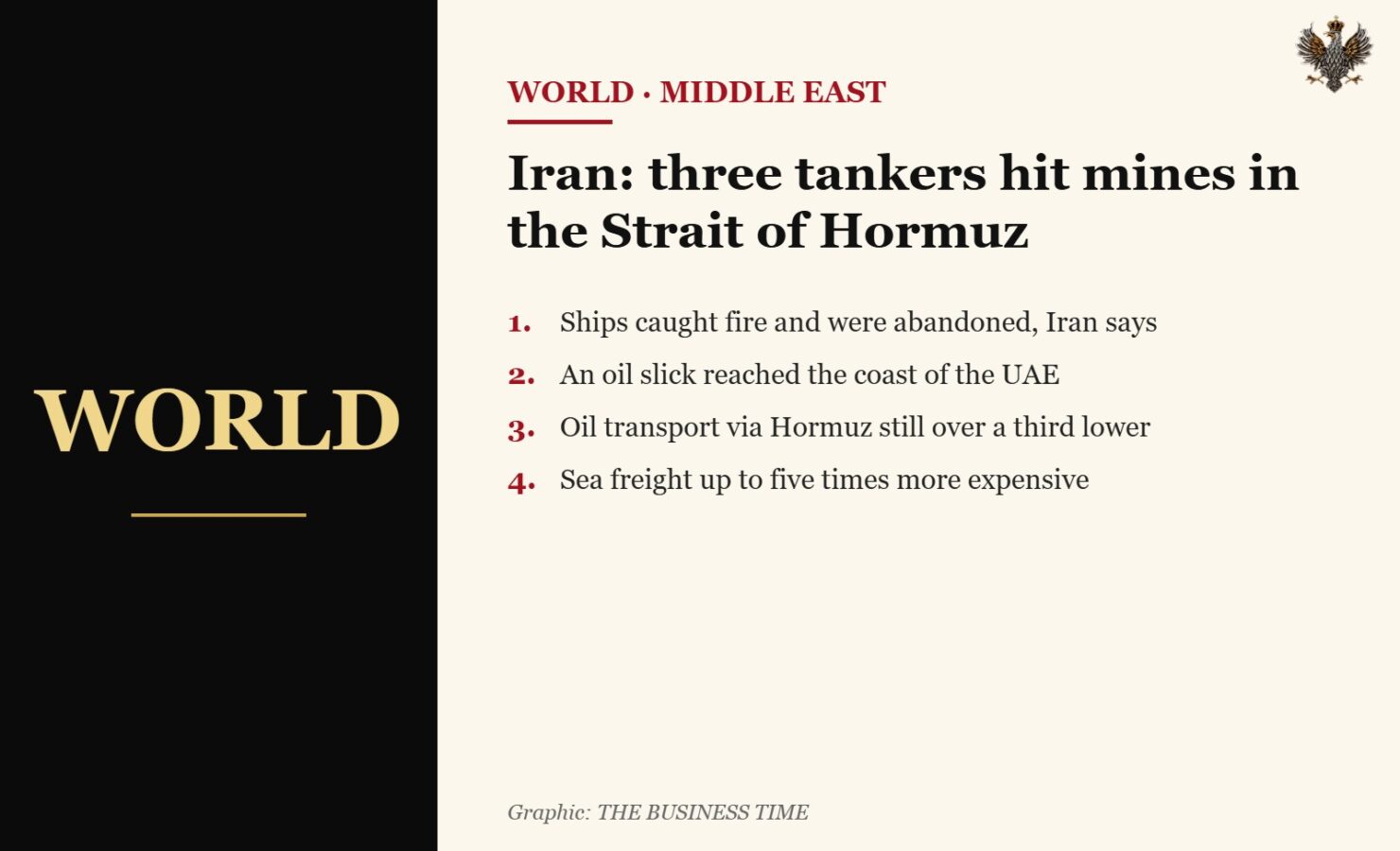
Iran’s Islamic Revolutionary Guard Corps (IRGC) said on Thursday 29 October that three tankers had hit naval mines in the Strait of Hormuz. According to the IRGC, this happened within the previous 24 hours, off the southern coast of the strait.
Iran claims the ships were using a route it had not authorised and had their radar and navigation systems switched off. After explosions and fires, the crews abandoned the vessels. The IRGC did not give the ships’ names or any information about the crews. There are no reports of casualties. These claims have not yet been confirmed by an independent source.
According to media reports, an oil slick from a damaged tanker has reached the coast of the United Arab Emirates. Authorities in Sharjah, Umm al-Quwain and Ras al-Khaimah have closed beaches. Desalination plants are under threat.
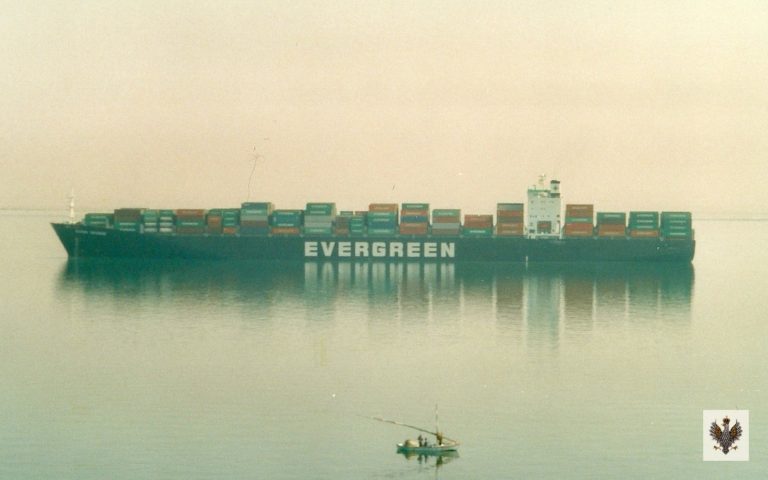
Iran tightened control of the strait on 28 February, after joint US and Israeli strikes on its territory. According to data from Kpler, cited by Rzeczpospolita, oil exports from the Persian Gulf have returned to pre-war levels thanks to other routes. However, oil transport through Hormuz itself is still more than a third lower, and sea freight costs have risen as much as fivefold.
What it means for you
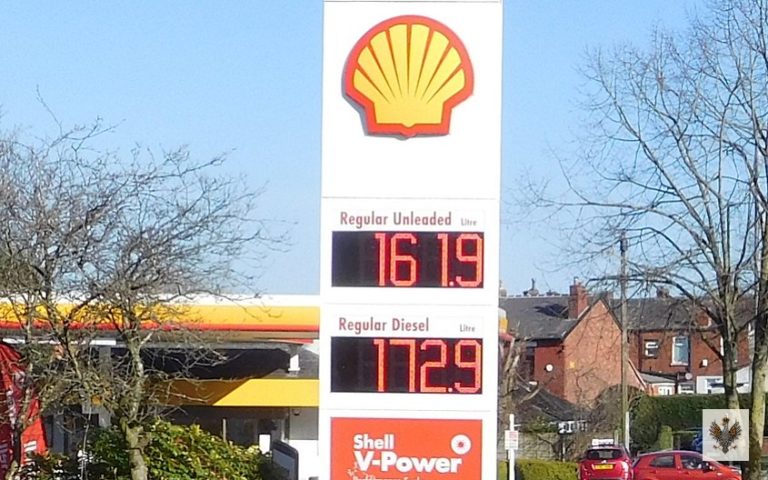
The UK government itself acknowledges that energy bills rose this year because of the conflict in the Middle East. Every new incident in Hormuz can push up the prices of oil, fuel and ship insurance. Transport and construction firms and importers will feel it first in their delivery costs. Families will feel it at petrol stations and in shop prices.
Our assessment
One incident will not halt supplies to Europe, because some oil travels by other routes. However, we believe the risk in Hormuz will stay with us for longer. High freight costs are no longer a one-off spike but a new normal. Businesses should factor this into their 2027 prices.
What to do
- If you import goods by sea, ask your freight forwarder about fuel and insurance surcharges for the coming months.
- Add a price adjustment clause to customer contracts for rises in transport costs.
- Follow official shipping warnings: UKMTO.
- Planning a trip to the Gulf region? Check the FCDO travel advice.
Sources: Xinhua – IRGC statement (29 October 2026); Rzeczpospolita/PAP (29 October 2026); GOV.UK (28 October 2026).
We assess factual corrections and substantive responses. Verified changes are reflected in our reporting.
Contact the editorial desk →