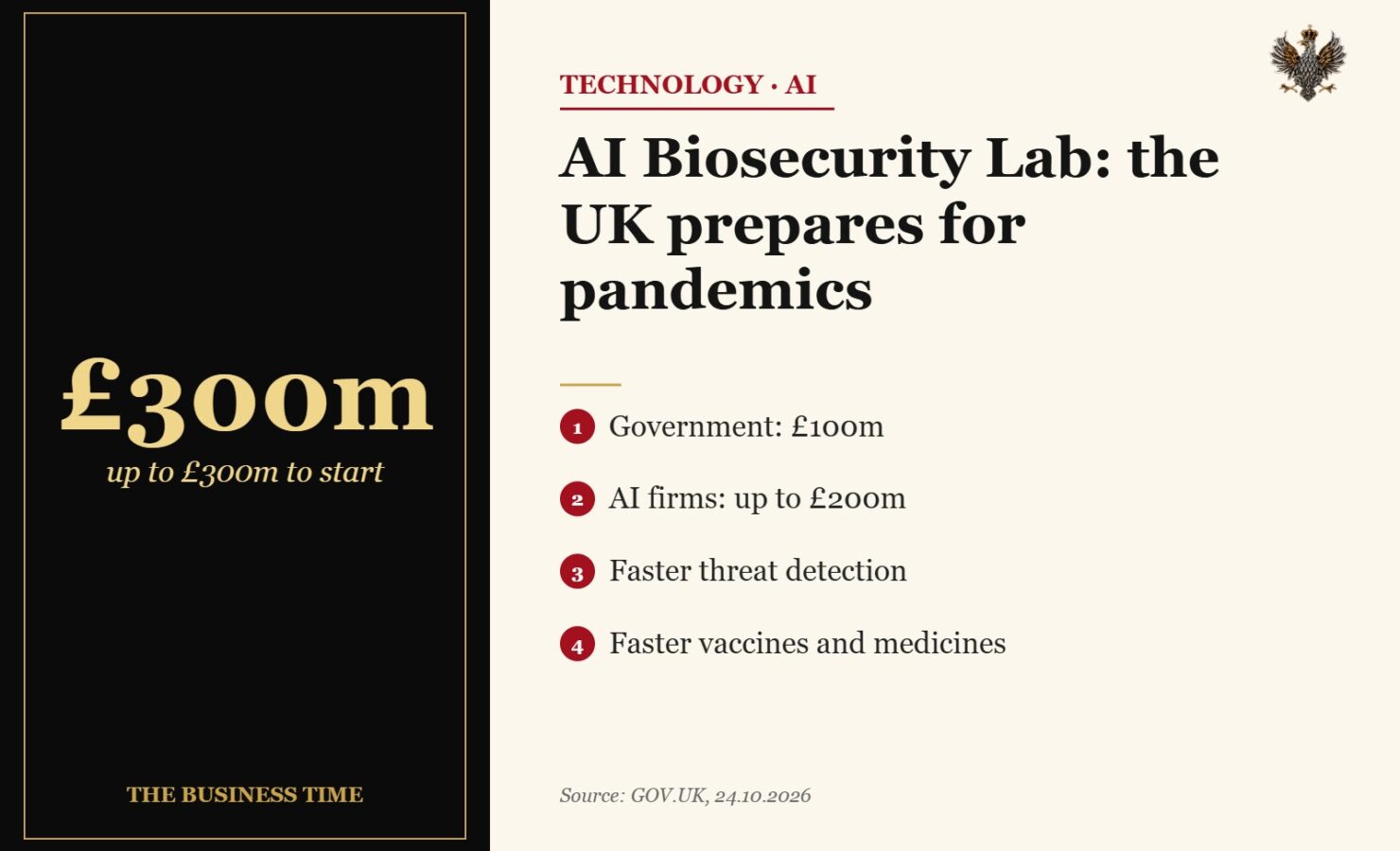
The United Kingdom is creating the AI Biosecurity Lab – a laboratory that will use cutting-edge artificial intelligence to protect against biological threats such as new diseases and pandemics. The government announced it on 24 October. According to GOV.UK, it is the world’s first institution dedicated solely to this task.
The lab will first focus on two things: detecting new threats faster and developing vaccines, medicines and other medical countermeasures faster.
Up to £300 million is planned to start. The government is providing £100 million. Companies have committed support worth up to £200 million: OpenAI – £100 million in computing power and model access, Anthropic – up to £100 million in model credits, access and technical support. Google DeepMind and Basecamp Research are also to collaborate.
The lab will operate as an independent non-profit organisation with a scientific board. State partners include UKHSA (public health agency), MHRA (medicines regulator), Dstl (defence laboratory) and APHA (animal and plant health agency).
What it means for you
- Families: the aim is a faster response to the next pandemic – faster tests, vaccines and medicines.
- Technology and science firms: the market for projects at the intersection of AI, medicine and security is growing. It is an opportunity for start-ups and experts, including from Poland.
- Workers: jobs in biotechnology and data analysis are growing in the UK.
Our assessment
It is an important move, because AI can shorten the time from detecting a threat to having a vaccine ready. The sum is large, but half of it consists of credits and model access from companies rather than cash. The key will be who sits on the scientific board and how the lab ensures that the same tools are not used for harmful purposes. The government is to give details later.
What to do
- Work in science, IT or biotechnology? Follow announcements of recruitment and grants on GOV.UK.
- Run a technology firm? Check innovation support programmes at Innovate UK.
Source: GOV.UK – Cabinet Office, “Introducing the AI Biosecurity Lab” (24.10.2026).
We assess factual corrections and substantive responses. Verified changes are reflected in our reporting.
Contact the editorial desk →