Updated: 25.10.2026, 14:09.
 By Agnes B.
THE BUSINESS TIME
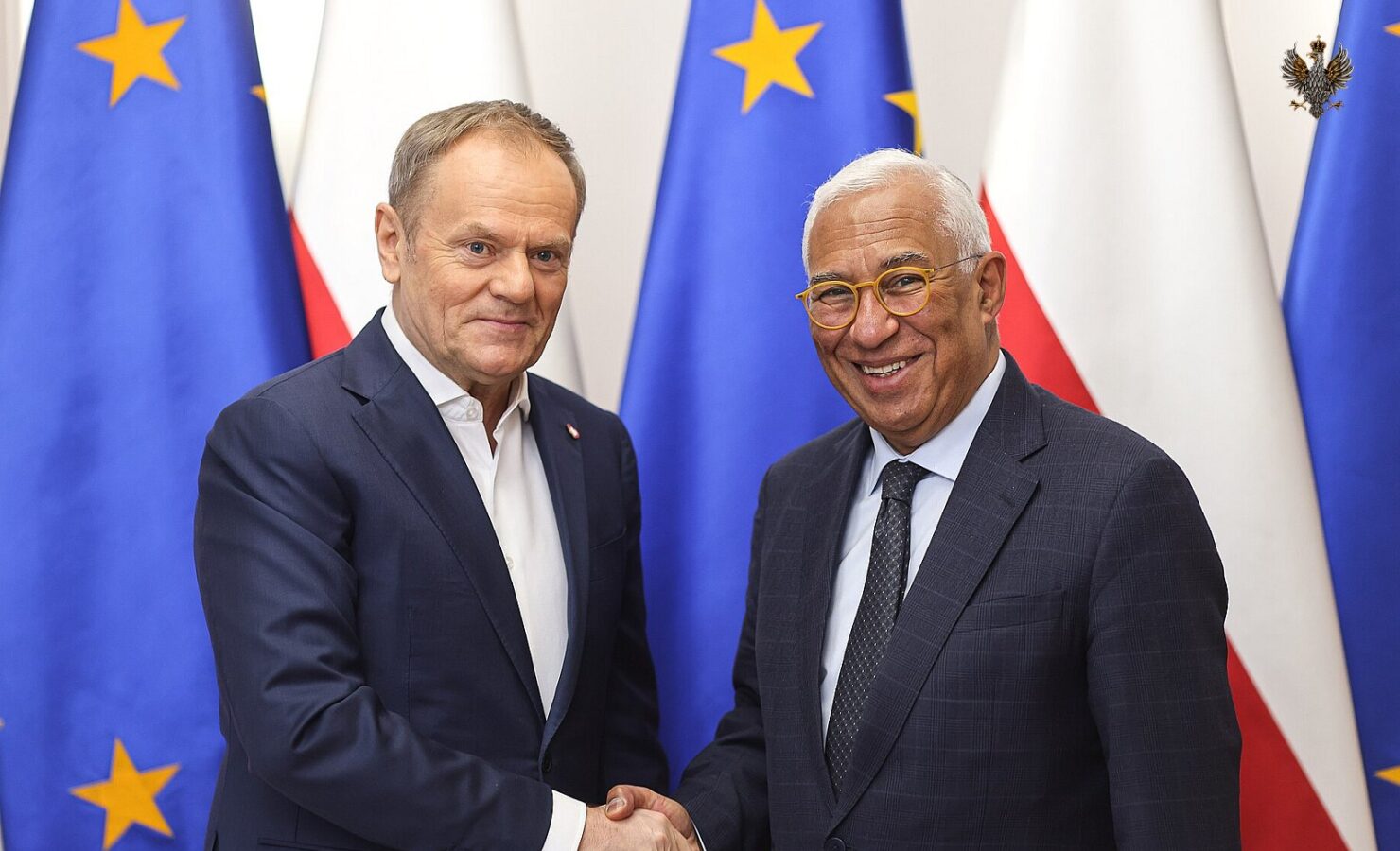
UK Prime Minister Andy Burnham spoke to Polish Prime Minister Donald Tusk on Wednesday morning, 21 October 2026. A readout of the call was published by the Prime Minister’s Office (10 Downing Street) on GOV.UK. Topics: the war in Ukraine, the upcoming UK–EU summit and the EU’s “Made in Europe” plan, which could make it harder for British firms to access public procurement in the Union.
The facts – what the 10 Downing Street readout says
- Both leaders condemned Russia’s continued, aggressive attacks on Ukraine.
- They agreed that NATO allies should keep up the pressure on Russia and increase support for Ukraine through the winter.
- They discussed the benefits of a stronger UK–EU relationship – for both sides – ahead of the upcoming UK–EU summit.
- Prime Minister Burnham raised concerns about “Made in Europe”. He said he wants a closer trading partnership with the EU that delivers growth “in every corner of the country”.
- The leaders said they would speak again soon.
The readout gives no new agreements, sums or dates.
What “Made in Europe” is
It is the informal name for part of the EU’s draft Industrial Accelerator Act . On 4 March 2026 the European Commission presented and adopted its legislative proposal on the matter. The draft is not yet law – in the European Parliament it awaits a committee decision. The proposal provides for “EU origin” (and low-carbon) requirements in public procurement and support schemes, among others.
According to an analysis by the European Parliamentary Research Service, in certain types of procurement or schemes, countries covered by relevant EU commitments under free trade agreements (FTAs) or the WTO Government Procurement Agreement (GPA) may receive treatment equivalent to EU origin. The scope of this protection is not uniform, however. For the UK it will depend on the final text of the act and the specific type of procurement. There is no simple rule that “UK = EU”.
On 8 October the UK minister for European relations, Hamish Falconer, warned that excluding the UK would weaken European industry. According to EU sources cited by Euronews, France wants stricter rules, while Germany is more open to including partners that give EU firms similar access.
What came before
4 March 2026 – the European Commission presents its legislative proposal: the Industrial Accelerator Act.
September 2026 – Prime Minister Burnham raises “Made in Europe” in a conversation with Ursula von der Leyen in New York.
8 October – Minister Falconer: excluding the UK “will weaken Europe”.
12 October – the date of the UK–EU summit is set: 20 November in Brussels.
21 October – the Burnham–Tusk call.
23 October – the Burnham–Trump call (Starlink for Ukraine, energy).
20 November – the UK–EU summit in Brussels.
What has changed
London is increasingly looking for allies in the EU before the summit. In TBT’s assessment Poland is one of the UK’s most important security partners, and on “Made in Europe” Warsaw’s voice may matter in deciding whether firms from outside the EU will be treated as European.
TBT analysis – conclusions
This was a phone call, not an agreement. But the order of topics matters: straight after Ukraine, the Prime Minister talks about trade and “Made in Europe”. It is a sign that for London, British firms’ access to EU procurement will be one of the main topics of the 20 November summit.
For Polish businesses in the UK that sell to the EU or work as subcontractors for EU firms, this issue may matter more than many tax changes.
Risks
TBT editorial assessment – not the government’s position.
| Risk | Affects | Level |
|---|---|---|
| British firms without “Made in Europe” preference in EU tenders | manufacturers, subcontractors, firms selling to the public sector in the EU | MEDIUM |
| The 20 November summit produces nothing concrete on trade | UK exporters to the EU | MEDIUM |
| A protracted war and pressure on regional security | families in Poland, firms with supply chains in Central Europe | MEDIUM |
Who it affects
- Polish businesses in the UK selling goods or services to the EU, especially to the public sector.
- Subcontractors of EU firms (construction, industry, transport, automotive).
- Poles in the UK and their families in Poland – on security and support for Ukraine.
What it means for you
A Polish business in the UK: nothing changes today. But if you bid in EU tenders or supply parts to firms that do, the “Made in Europe” rules may in future affect whether your product counts as “European”.
Workers and families: the call does not change any rules or benefits. It is a signal of political cooperation between London and Warsaw.
How to prepare
- Check how much of your sales go to public-sector buyers in the EU or to firms that supply them.
- Ask your EU business partners whether they are already asking about the origin of goods and components.
- Don’t make decisions pre-emptively – the draft may still change.
What to watch next
- The UK–EU summit in Brussels, 20 November 2026.
- Work in the European Parliament and the EU Council on the Industrial Accelerator Act.
- Further readouts of the Prime Minister’s talks with EU leaders.
Read also: Prime Minister Burnham spoke to Trump · All Prime Minister’s Office statements
Sources
- Prime Minister’s Office, 10 Downing Street, GOV.UK – PM call with Prime Minister Tusk of Poland: 21 October 2026 (21.10.2026, 13:17) – primary source
- Euronews – minister Hamish Falconer on “Made in Europe” (08.10.2026) – secondary source
- European Parliamentary Research Service (EPRS) – the international dimension of the draft Industrial Accelerator Act (09.2026) – official EU source
- Prime Minister’s Office, 10 Downing Street, GOV.UK – Prime Minister to attend UK-EU summit in Brussels on 20 November (12.10.2026) – primary source
- European Commission – Commission proposes Industrial Accelerator Act (04.03.2026) – primary source
- European Parliament, Legislative Observatory – procedure 2026/0068(COD), status – official EU source
GOV.UK statement under the Open Government Licence v3.0. Translation and editing: THE BUSINESS TIME Editorial Team.
We assess factual corrections and substantive responses. Verified changes are reflected in our reporting.
Contact the editorial desk →