The UK Health Security Agency (UKHSA) published its weekly winter virus report for England on 29 October 2026. It covers the week from 19 to 25 October.
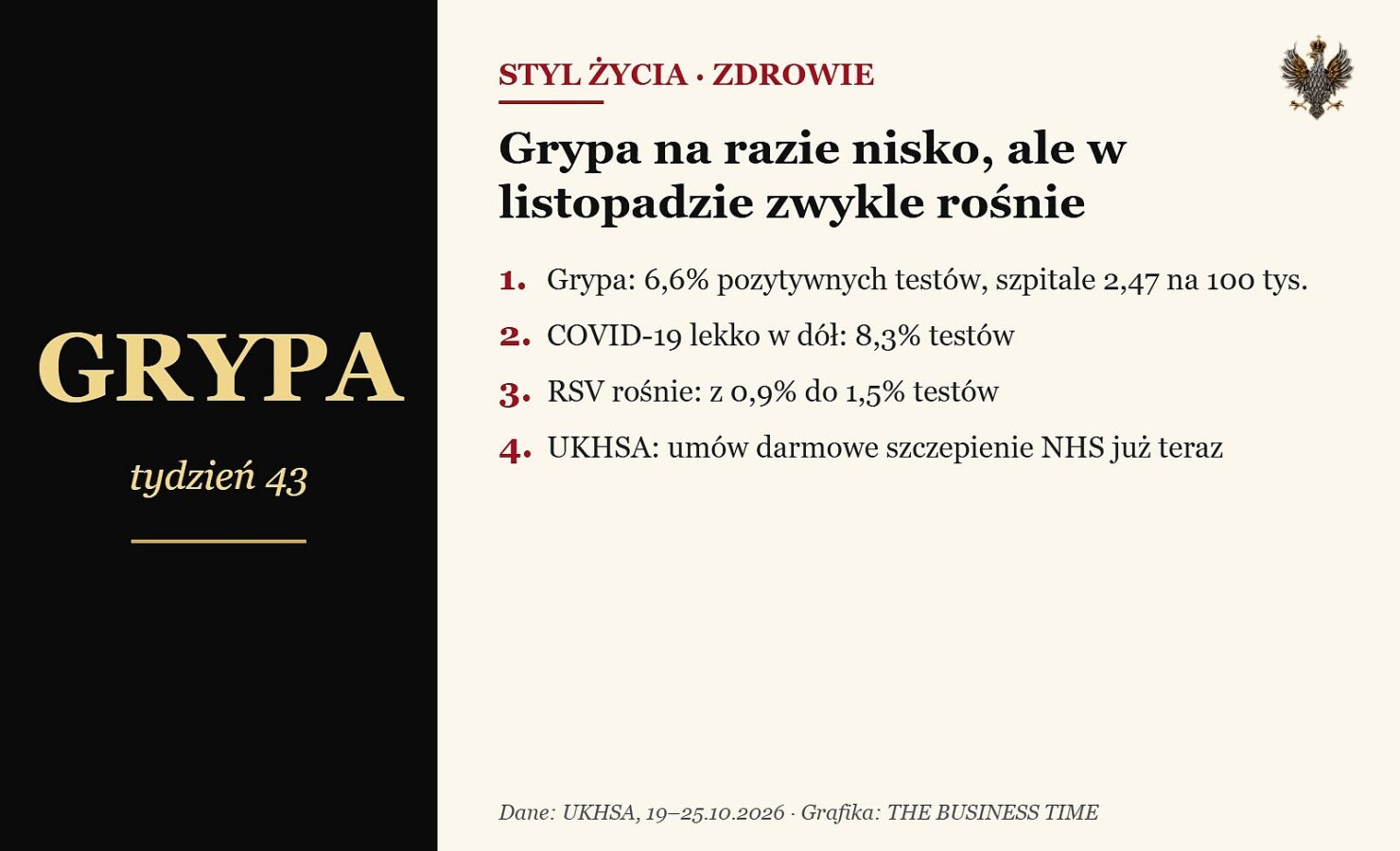
Flu is circulating at a low level. The share of positive laboratory tests was 6.6% (6.4% a week earlier). Hospital admissions for flu were stable at 2.47 per 100,000 people.
COVID-19 fell slightly. 8.3% of tests were positive (previously 8.8%), and hospital admissions stood at 2.76 per 100,000 people.
RSV, a virus that is particularly dangerous for babies and older people, has started to rise. Test positivity went up from 0.9% to 1.5%, but this is still at baseline level.
The most common virus at the moment is the common cold (rhinovirus). UKHSA epidemiologist Dr Alex Allen reminds people that flu cases usually rise in November. She advises those who are eligible to book their vaccination now, and for children to get the nasal spray vaccine as soon as possible.
Norovirus (vomiting and diarrhoea) is at normal levels – reports were 39% below the five-season average. UKHSA reminds the public that alcohol gel does not kill norovirus. Hands must be washed with soap and water.
What this means for you
Now is a good time to get vaccinated, before flu starts to spread. This applies especially to older people, pregnant women, people with long-term health conditions and parents of young children. Employers should prepare for more sickness absence in November and December.
If you or your child have vomiting or diarrhoea, stay away from work, school or nursery for 48 hours after symptoms have stopped.
Our view
The figures are calm, but this is the lull before the season. In previous years flu has risen from November. The vaccine takes about two weeks to work, so waiting until December makes little sense.
What to do
- Check whether you are eligible for a free vaccine and book an appointment: NHS – flu vaccine.
- Ask your child’s school or your GP about the nasal spray vaccine for children.
- If you have cold symptoms, stay at home if you can and do not visit people in hospitals or care homes.
- Wash your hands with soap – gel alone is not enough against norovirus.
Source: UKHSA – Latest weekly winter virus surveillance data, GOV.UK (29.10.2026).
We assess factual corrections and substantive responses. Verified changes are reflected in our reporting.
Contact the editorial desk →