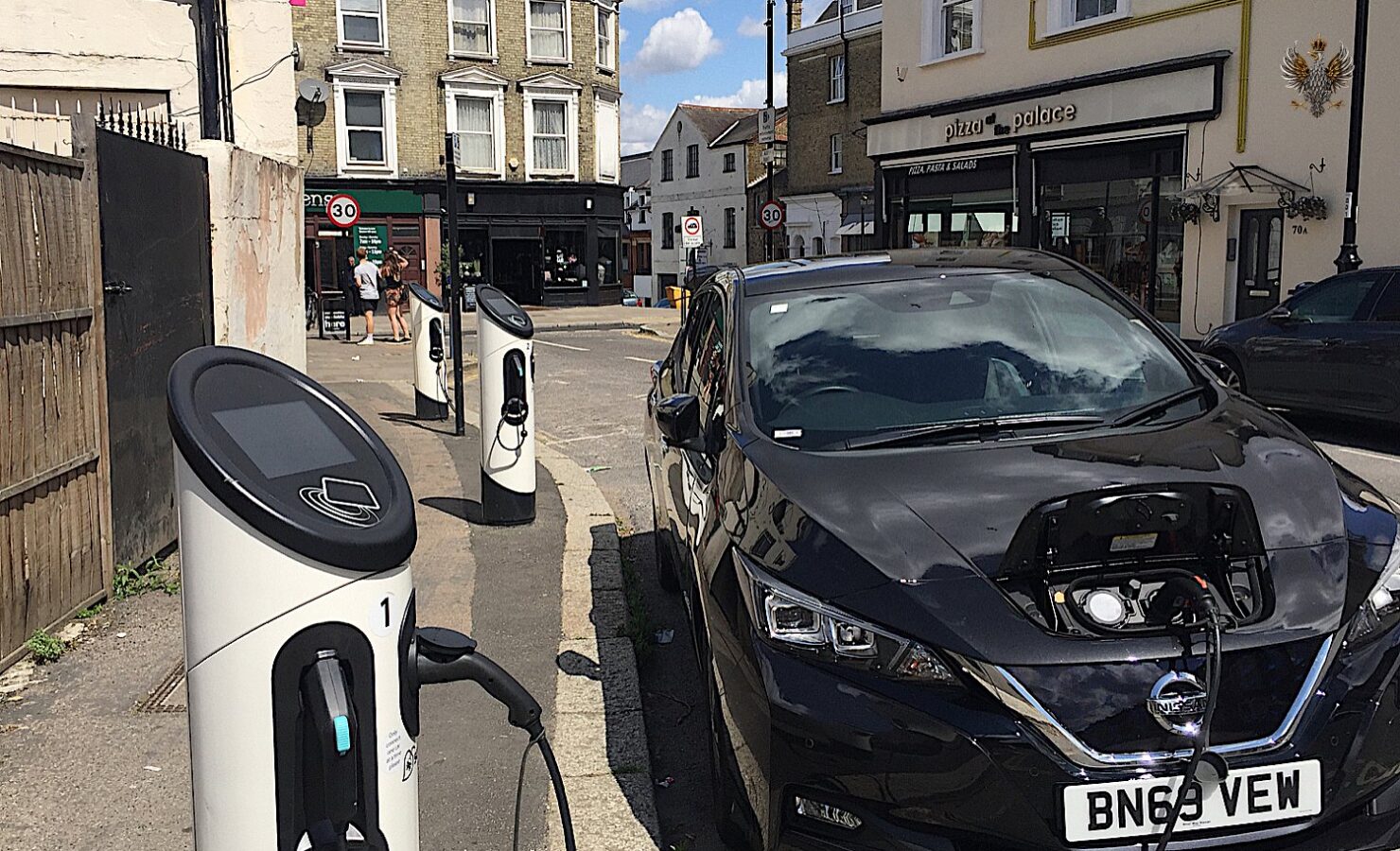
Electric car drivers who have no driveway or garage will pay less to charge on the street. The government announced this in the Budget on 28 October.
From spring 2027, the state will spend £100 million over two years to cut prices at lower-powered public chargers. These are charge points on residential streets, where a car charges for several hours or overnight. They make up around a third of all chargers in the country.
According to the government, an average driver who uses such charge points will save around £150 a year.
An independent review of prices showed that since 2021, charging at slower chargers has risen by 69% in real terms, and at fast chargers, e.g. near motorways, by 94%. Around a third of households in the UK have no off-street parking.
The government will also set up an expert taskforce to check whether drivers could use their cheaper home electricity tariff at some public chargers. The Department for Transport is to give details.
There are more than 124,000 public charge points in the UK, 7.4% more than a year ago.
What it means for you
Many Polish families live in terraced houses and flats without a driveway. For them, charging on the street is the only option. The cut is meant to genuinely help those who pay the most today. If you are considering buying an electric car, charging costs from 2027 may be lower than they are now.
Our assessment
This is a good direction, but the scale is modest: £100 million over two years is not much for such a large network. We do not yet know exactly how much the price per kWh will fall or how the subsidy will reach operators. The most interesting idea is “porting” the home tariff – if it comes into force, it could change bills more than the subsidy itself.
What to do
- Check where street chargers are near you, e.g. on the Zap-Map map.
- Compare the current street price per kWh with your home tariff – this will show how much you can gain.
- Follow announcements from the Department for Transport on details of the scheme.
Source: GOV.UK – Cutting electric vehicle charging costs (28 October 2026).
We assess factual corrections and substantive responses. Verified changes are reflected in our reporting.
Contact the editorial desk →