The NHS in England now carries out around one million more CT and MRI scans a year than it did two years ago, according to figures published by the government and NHS England on Tuesday 3 November. For Poles waiting for a scan, it is a sign that queues may be getting shorter – but only for those who know how to use the system.
What was announced
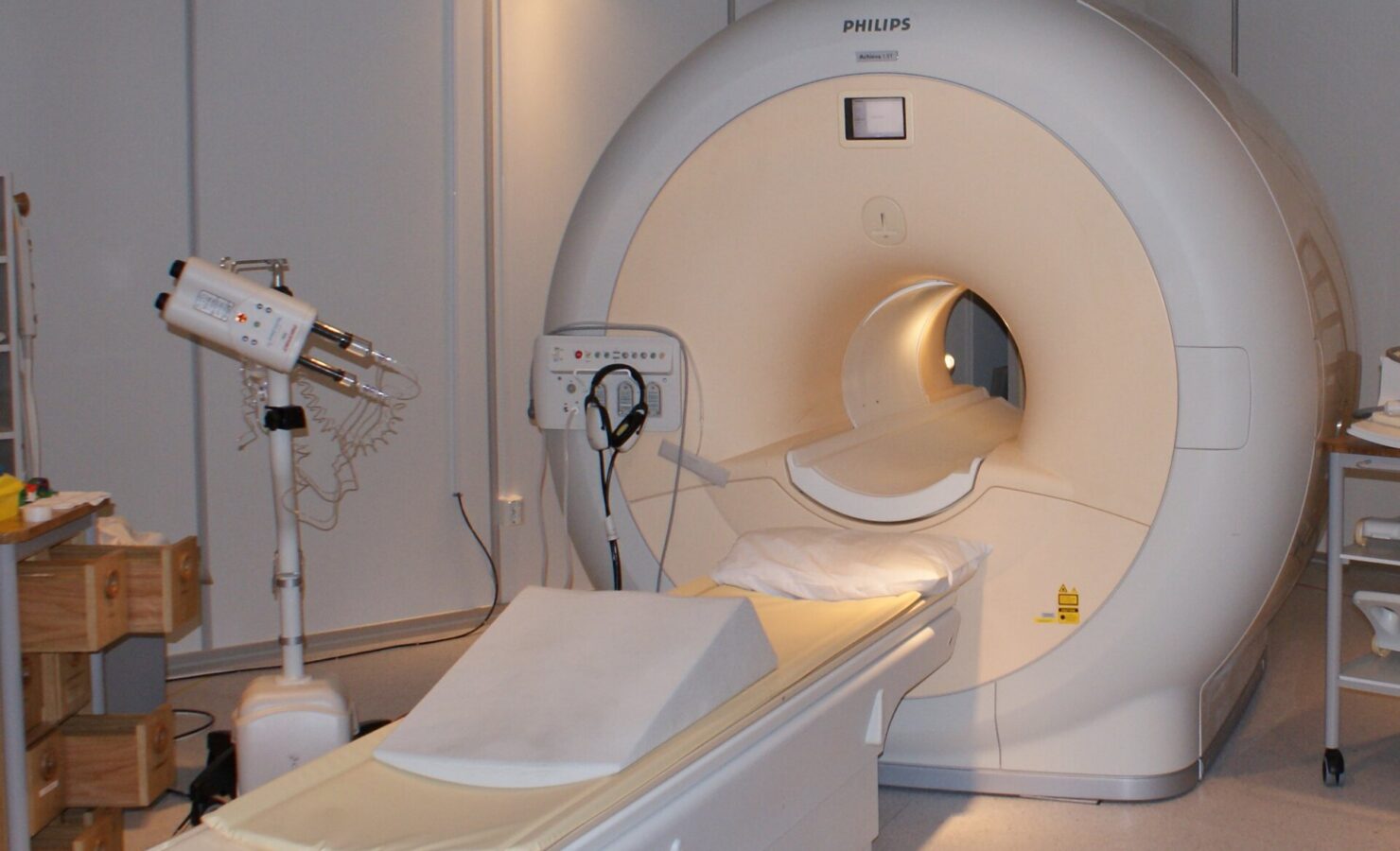
According to the Department of Health and Social Care and NHS England, 125 new CT and MRI scanners were added to the NHS between March 2024 and March 2026. Of these, 107 went into Community Diagnostic Centres (CDCs) outside hospitals.
These centres carried out almost 2.2 million CT and MRI scans in the 12 months to March 2026 – about one million more than in the same period two years earlier.
The second element is artificial intelligence. Software that speeds up MRI scans is now installed on 54% of compatible scanners. It allows hospitals to carry out, on average, 14% more scans without losing image quality, and patients spend less time in the scanner. The government estimates that a full rollout could deliver up to 162,000 extra MRI scans a year on existing equipment. By 2029 every NHS trust is to be offered an upgrade.
One example is the new Manchester and Trafford diagnostic centre, which opened on 29 October and cost £19.2 million.
What it means for Poles in England
The point is simple: more scanners mean a chance of a faster scan, but the people who benefit most are those registered with a GP who know their rights as patients.
First – the GP. An NHS CT or MRI scan usually requires a referral. Without GP registration there is no referral. People with settled or pre-settled status, and those who paid the Immigration Health Surcharge with their visa, are entitled to NHS care on the same basis as British citizens.
Second – waiting times. The NHS standard is that a diagnostic test should take place within six weeks of referral. The government says the diagnostic waiting list fell in three of the five months since April. If you are waiting longer, ask your surgery or the hospital about your date.
Third – choice. In England patients have the right to choose where they are referred for planned care. A local diagnostic centre may be closer to home and offer evening or weekend slots – important for shift workers in warehouses, transport or care.
Fourth – England only. The figures cover NHS England. Scotland, Wales and Northern Ireland run separate health systems with their own statistics.
What the experts say
Health minister Karin Smyth stresses that a fast diagnosis matters most when cancer is suspected. Professor Peter Johnson, NHS England’s national clinical director for cancer, says earlier detection gives more treatment options. Dr Stephen Harden, President of the Royal College of Radiologists, notes that demand keeps rising and that staff – radiologists and radiographers – are needed as well as equipment.
That is an important caveat: without enough staff to report on images, the queue may simply move from “waiting for a scan” to “waiting for a result”.
In brief
- 125 new CT and MRI scanners in the NHS (March 2024 – March 2026).
- Around 1 million more scans a year.
- AI speeds up MRI scans by 14% on average.
- Register with a GP – without it you cannot get a referral.
Sources:
We assess factual corrections and substantive responses. Verified changes are reflected in our reporting.
Contact the editorial desk →