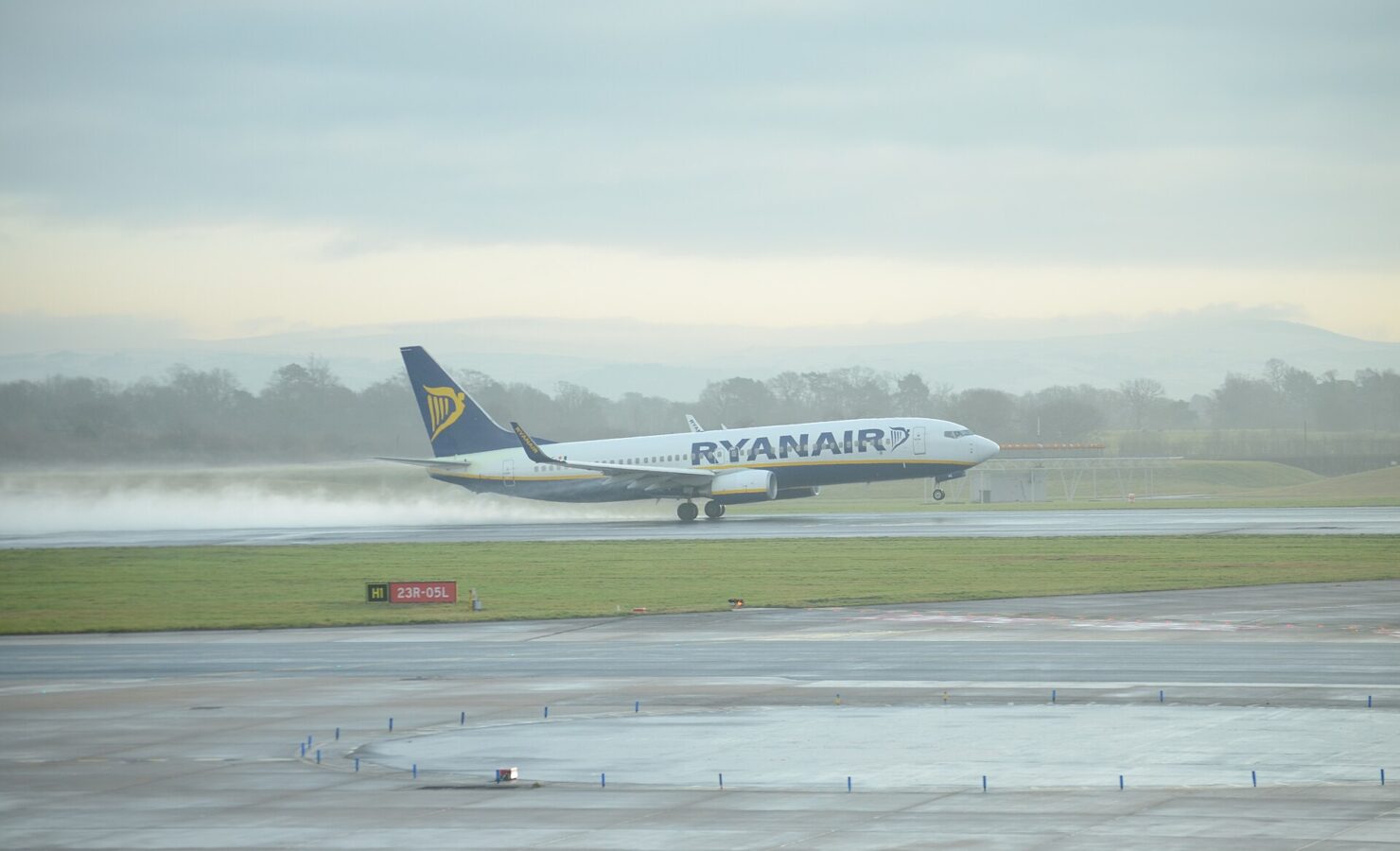
Ryanair, the airline many Poles in Britain use to fly home, published its results for the first half of its financial year (April–September 2026) on Monday 2 November 2026. Passenger numbers were up, fares were down and profit fell. For travellers, though, the key message concerns the months ahead: fuel is getting more expensive, and the carrier makes no secret that this will show in prices.
The numbers: record passengers, lower profit
According to the company’s official statement, Ryanair carried 125.8 million passengers in the six months to 30 September, 6% more than a year earlier. The load factor was 95%. Revenue rose 3% to €10.08bn.
Profit after tax, however, fell 15% to €2.15bn (from €2.54bn). Operating costs rose 10% and fuel costs 15%, to €3.40bn. The company says the price of its unhedged fuel (about 20% of its needs) roughly doubled to around $130 a barrel.
The average fare over the half-year was €55.70, 4% lower than a year earlier. Ryanair attributes this partly to conflict in the Middle East, which made customers hesitant and pushed bookings later.
Winter: fares slightly up, little new capacity
For the third quarter (October–December) the company reports “strong” demand, with fares trending modestly ahead of last year. The final outcome will depend on bookings for the November school half-term and Christmas. Ryanair cut its full-year traffic target from 216 million to 214 million passengers, meaning winter traffic (November–March) is expected to be broadly flat.
The company gave no full-year profit guidance. Chief executive Michael O’Leary said Ryanair has “zero” visibility of the first quarter of 2027.
Fuel in 2027: €2bn more
Ryanair estimates that its fuel bill for the financial year starting April 2027 will rise by about €2bn at current forward prices. So far it has hedged only about 25% of fuel for that period, at around $95 a barrel, compared with about $67 this year. According to Reuters (via Investing.com), Mr O’Leary expects European short-haul fares to “increase materially”, although he admits this is unlikely to fully offset the higher costs. The company is also looking at savings, including temporary pay freezes.
What it means for Poles in the UK
Our view: the cheap fares of this half-year reflected a temporary dip in demand, not a lasting trend. The evidence is in the company’s own statement: winter fares are already rising, capacity growth this winter has practically stopped, and from spring 2027 the airline faces much higher fuel costs.
- Christmas: Ryanair itself says the quarter’s result depends on late bookings for Christmas. Anyone planning to fly to Poland for the holidays should not count on prices falling in December.
- Spring and summer 2027: the expected fare rises mainly concern the financial year starting April 2027. It is worth watching Easter and summer fares earlier than usual.
- Businesses: Polish firms in the UK that send staff to building sites, contracts or trade fairs in Poland and the EU should budget for higher travel costs in 2027.
This is not financial or purchasing advice – fares depend on route, date and demand. One thing is clear: the airline itself is talking about rising costs and has given no profit guidance, which usually means a more cautious pricing policy.
Sources:
We assess factual corrections and substantive responses. Verified changes are reflected in our reporting.
Contact the editorial desk →